Boating Safety News
Blog Home All Blogs

Winter is a Great Time to Take a Boating Safety Course

Posted By Michael Wesolowski, Friday, January 4, 2019
Updated: Tuesday, February 25, 2020

Winter is a Great Time to Take a Boating Safety Course

As the days get colder, it seems like the summer will never get here. Although your boat and gear may be stored away safely for the winter, you shouldn’t let your skills and knowledge get put away, too. Many states make changes to boating laws and regulations over the winter months, so it is good to get a refresher now that the New Year is here. A boating safety course will make sure that you know everything you can about being a safe boater including the legal requirements before inviting friends and family out on your boat in a few months when it warms up again.

You can find classroom courses that are offered locally in your area in the evenings or on weekends or you can take a class online from your home or office.  Courses are offered by state boating agencies, the U.S. Coast Guard Auxiliary, America’s Boating Club and many companies and organizations, just make sure that the course meets the requirements for certification or to get a license in your state. The interactive, online course offered by our friends at iLearntoBoat.com meets the legal requirements in many states with many more being added daily. Regardless of how the course is presented, the test will include questions on life jackets, fire safety, anchoring procedures, the Navigation Rules, emergency situations, and state-specific information that boaters should know to be safe on the water in their state. If you boat in multiple states, it may be good to take a course in each of those states to be certified and up to speed on the rules in each state.

As an added incentive to get this training, boating insurance companies frequently offer discounts to boaters who successfully complete an approved boating safety course. Check with your insurance company for a list of courses or you can visit the U.S. Coast Guard’s website to find a list of approved courses that will allow you to get your boating certificate or boating license.


Tags:  2018-19  Americas Boating Club  boating certificate  boating license  Boating Safety  Boating Safety Course  Education  iLearntoBoat  Tow Bee Boating Safety Tips  US Coast Guard  US Coast Guard Auxiliary  US Power Squadrons 

PermalinkComments (0)
 

Your Clothes Can Save Your Life

Posted By Gail Kulp, Monday, December 17, 2018
Updated: Friday, February 7, 2020

Your Clothes Can Save Your Life

Falling overboard can be scary. Although the best advice is to wear your life jacket at all times, we all know that it isn’t always done. If you find yourself overboard with no life jacket in sight, you do have other options which can work in a true emergency. Here are 5 tips from the Sea Tow Foundation of ways that your clothes can save your life.

  1. A piece of clothing can be used to reach out to a person in the water to pull him back onto the boat. Reaching out to a person is the first step in the “reach, throw, row, but don’t go” steps for rescuing someone in the water.
  2. Keep your clothes on to conserve body heat. Obviously, this depends on the temperature of the air and water where you are boating as well as the type of clothing that you are wearing. However, a shirt can act like a wetsuit top and help you trap heat inside against your core. Clothing can also block the harmful sun’s rays and prevent painful sunburn.
  3. Use your clothes to help your float. Take off your pants and tie the legs together using an overhand knot. To fill them with air, lift them over your head behind you and quickly bring your arms and the pants forward toward the water. They will fill with air and can be used as a buoy or float aid. Jeans are especially good, but it will work with other fabrics as well.
  4. Take off your shoes. It is difficult to tread water and stay afloat with weights strapped to your feet. If your shoes float, you can put them under your armpits to help with flotation. If they are heavy, they may sink, but it is better to lose a pair of shoes than your life.
  5. If you can find something floating in the water like a cooler or a piece of debris, you can climb onto it and use your clothing items as a paddle or sail to help propel you along in the water.

Practicing these techniques in a pool is a good idea before going out on a boat. And, again, the best advice is to always wear your life jacket. Having one on onboard is required, but getting to it and putting it on with little to no notice can be impossible. And with more comfortable life jackets on the market, there is no excuse not to wear one every time you on on or around water. If you need to borrow a life jacket for your boating trip, you can find a Sea Tow Foundation Life Jacket Loaner Station near you at http://www.boatingsafety.com/map/.

Tags:  2018-19  Clothes  Swim with Clothes  Tips 

PermalinkComments (0)
 

Be Sure to Wear Your Life Jacket This Winter and Fall

Posted By Gail Kulp, Friday, November 2, 2018
Updated: Tuesday, February 25, 2020

Did you know that your chances of dying from going overboard are five times greater in winter months than in the summer? If you were to become immersed in cold water for even a short period of time, manual dexterity will be lost within 10 minutes. This will impeded your ability to swim or put on a life jacket, which could lead to drowning long before hypothermia even begins to set in. For that reason, the Sea Tow Foundation wants to remind boaters to always wear their life jackets once the temperatures begin to drop.

A total of 7 northern states have laws requiring life jackets to be worn by boaters during typically cold weather months. Many of these requirements specifically mention that the life jackets must be USCG-approved and mention specfic types of Personal Flotation Devices (PFD) that must be worn. While each state's policy may differ, it is important to follow these laws. 

Connecticut: USCG-approved life jackets must be worn by anyone in a manually propelled vessel from October 1 through May 31 (must be a Type I, II, III, V or V-hybrid PFD).

Maine: All boaters canoeing or kayaking on the Saco River between Hiram Dam and the Atlantic Ocean between January 1 and June 1 must wear a life jacket (Type I, II or III PFD).

Maryland: A person aboard a boat, raft or tube shall wear a USCG-approved life jacket (Type I, II, III or V PFD) at all times while underways on the Upper Potomac River and its tributaries, during the period beginning each November 15 and ending each May 15. 

Massachusetts: All boaters canoeing or kayaking from September 15 - May 15 are requied to wear a USCG-approved life jacket (Type I, II or III PFD).

New York: The mandatory life jacket requirement applies to everyone aboard boats less than 21 feet in length, including rowboats, canoes and kayaks, between November 1 and May 1.

Pennsylvania: Boaters are required to wear USCG-approved life jackets on boats less than 16 feet in length or any cane or kayak during the cold weather months from November 1 through April 30.

West Virginia: A person aboard a boat, raft or tube must wear a USCG-approved life jacket (Type I, II, III or V PFD) at all times while underway on the Shenandoah River within the boundaries of West Virginia during the period beginning each November 15 and ending each May 15.

Even if your state doesn’t have a cold weather life jacket wear requirement, it is a smart and safe idea to wear a life jacket any time the water temperature drops below 60 degrees. It is also important to ensure that the life jacket you are wearing is appropriate for the type of activity that you will be participating in. Life jackets save lives, but only if they are worn.

Tags:  2018-19  Cold Weather  Life Jacket Loaner Program  Life Jacket Wear Policies  States  Winter 

PermalinkComments (0)
 

Five Fall Boating Safety Tips

Posted By Gail Kulp , Monday, October 22, 2018
Updated: Friday, February 7, 2020

Five Fall Boating Safety Tips

The fall season is already upon us, but that doesn’t mean boating has to come to an end just yet. In fact, some of the best leaf peeping and duck hunting can only be done from the water in October and November. Here are a few safety tips for boating on these shorter, cooler autumn days.

  1. Update your charts - Helpful landmarks you’ve relied on all summer to point out shallow sections may look different as the leaves change color and fall. You also may find yourself cruising home in the dark more often, when those landmarks will be harder to spot. Aids to navigation such as channel markers and buoys placed by local authorities may be pulled as early as October in some areas. Make sure that your charts – electronic and physical – are up to date and use them to navigate instead.
  2. Check your lights and flares - Check to see that your boat’s navigation lights are in working order and your emergency flares are not past their expiration date. Carry a couple of waterproof flashlights to help you unload passengers and their gear at the dock or boat ramp after dark, and be sure to stock spare batteries. A flashlight also can be used in an emergency to signal for help.
  3. Carry a VHF radio - During the fall boating months, the waterways are less crowded. While this can be peaceful, it also means that if you run into a problem, you might not see another boater for hours, if at all. A VHF radio can be used to call for help even in spots where your cell phone has no signal.
  4. Dress in layers - As the days get shorter, there can be rapid changes in both air and water temperature from day to evening making this perfect sweater weather. Dress in layers that can be easily removed or added when the air warms up or grows chilly. And, make sure that your life jacket can fit over your layers.
  5. Wear a life jacket - In the fall, water temperatures can grow much colder than the air. Boaters who accidentally fall overboard run an increased risk of hypothermia. While children under 13 must wear a life jacket when the boat is underway by law, it’s a good idea for adults to wear them, too and there are 6 states with cold water life jacket wear requirements now. Check with your state boating agency to see if you need to buckle up before boating. You may even want to purchase life jackets with lights attached so rescuers can find you in the water.

Tags:  2018-19  boating in the fall  cooler weather  fall boating  fall boating tips  leaf peeping from a boat  november boating  october boating  shorter days  sweater weather  Tips 

PermalinkComments (0)
 

The Most Important Reason to Take an Emergency Beacon When You Boat, Hike, or Paddle

Posted By Gail Kulp, Thursday, April 5, 2018
Updated: Monday, October 23, 2023

The Most Important Reason to Take an Emergency Beacon When You Boat, Hike, or Paddle

Please note that the Sea Tow Foundation's beacon rental program ended as of January 1, 2020

A big part of outdoor recreational safety, whether in the air, on land or water is being prepared for the “unexpected.”  In particular, it is important that you have the means to request help should an emergency arise.  That’s because, despite what many tend to believe, it is often difficult for rescuers to find someone who is lost and in need of rescue.  An essential element of being able to return home to your loved ones, or receiving prompt medical attention, is to have the right signaling equipment.

One piece of equipment to definitely consider adding to your gear list is an emergency satellite beacon.  This article will offer basic information about it with a focus on land and water use.  Plus, it will underscore the importance that you remember, on your next hiking or water adventure, to take a beacon with you.

What is a Beacon

A beacon is an electronic signaling device that alerts search-and-rescue services in the event of an emergency by transmitting a coded message on the 406 MHz distress frequency via satellite and earth stations to the nearest rescue coordination center.

Types of Beacons

Common emergency rescue beacons transmit at 406 MHz, can be detected by satellite, and are referred to in conversation by their abbreviations: EPIRBs and PLBs.

Emergency Position Indicating Radio Beacon (EPIRB)

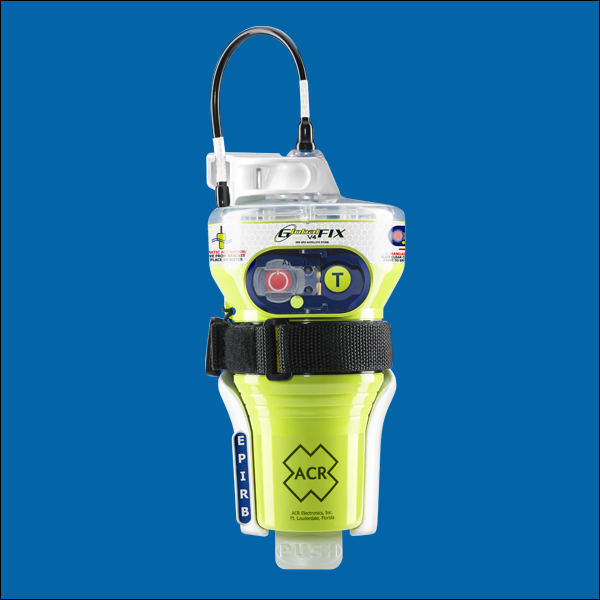
EPIRBs are for use in maritime applications and divided into two categories. Category I EPIRBs are activated either manually or automatically. The automatic activation is triggered when the EPIRB is released from its bracket. Category I EPIRBs are housed in a special bracket equipped with a hydrostatic release. This mechanism releases the EPIRB at a water depth of 3-10 feet. The buoyant EPIRB then floats to the surface and begins transmitting. If you own a Category I EPIRB, it's very important that you mount it outside your vessel's cabin where it will be able to "float free" of the sinking vessel.

Category II EPIRBs are manual activation only units. If you own one of these, it should be stored in the most accessible location on board where it can be quickly accessed in an emergency.

406 MHz beacons are digitally coded and transmit distress signals without delay. This means that even a brief inadvertent signal can generate a false alert. To avoid getting a call from the Coast Guard make sure that when you test your EPIRB you follow the manufacturer's recommendations carefully. Initiating a false request for assistance resulting in the launch of Search and Rescue efforts can result in fines of $1,000 or more for each instance.

Personal Locator Beacons (PLBs)

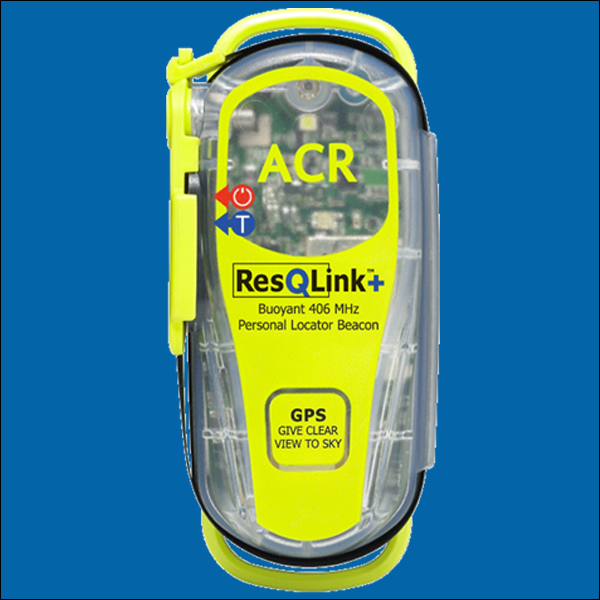
PLBs are portable units that operate much the same way as EPIRBs. These beacons are designed to be carried by an individual person instead of on a boat or aircraft. Unlike some EPIRBs, they can only be activated manually and operate exclusively on 406 MHz. Like EPIRBs, all PLBs also have a built-in, low-power homing beacon that transmits on 121.5 MHz. This allows rescue units to hone in on the distress beacon once the 406 MHz satellite system has provided the necessary position information. Some PLBs also allow GPS units to be integrated into the distress signal. This GPS-encoded position dramatically improves the location accuracy down to the 100-meter level…that’s roughly the size of a football field!

Another benefit of PLBs is that they are very easy to pack and add very little additional weight.  Many hikers even attach them to the shoulder harness on their backpack where they can quickly access them if needed. And boaters attach them to the shoulder of their life jackets for easy and quick access.

In turn, PLBs are not only extremely effective, but they are also very cost efficient. Unlike other types of electronic signaling devices, there are no monthly service fees in addition to the original cost of purchase. Instead, PLBs offer a simple, reliable, and no-nonsense way to request help when you most need it.

All Beacons Need to Be Registered

You must register your beacon after purchase. It is the law and, without registration, Rescue Coordination Centers (RCC) won’t be able to react as quickly … and ultimately this may delay a Search and Rescue (SAR) response should you be in an emergency.

The process is quick, easy, and you can do register online.  If you have a 406 MHz beacon and have not registered it, please do so by contacting the National 406 MHz Registration Database at this link https://beaconregistration.noaa.gov/RGDB/index.

When to Use a Beacon

When you need it most, search-and-rescue organizations instruct that beacons are satellite signaling devices of last resort, for use when all other means of self-rescue have been exhausted, where the situation is grave with imminent danger and bodily harm or valuable property will occur without assistance. In simpler terms, use the beacon only when absolutely necessary and after trying other communication devices.

Survival Stories

You can find beacon survival stories from air, land, and water on the 406 Survival Club page at https://www.acrartex.com/survivor-stories/


Please note that the Sea Tow Foundation's beacon rental program ended as of January 1, 2020

 Attached Thumbnails:

Tags:  2018-19  ACR Electronics  Emergency Beacon  EPIRB  PLB 

PermalinkComments (0)
 
Page 2 of 2
1  |  2
Join Our Mailing List

Get the latest news, information,
events and more delivered to your
email inbox

Join
On-Water Assistance
SEA TOW

For membership information or help with boat towing and marine assistance

Connect With Us

Sea Tow Foundation
P.O. Box 1325
Southold, NY 11971
www.boatingsafety.com
888-276-7691

©2025, Sea Tow Services International, Inc. ("STSI")
Subject to Sea Tow Foundation's licensed use of STSI's trademarks. All rights reserved.